
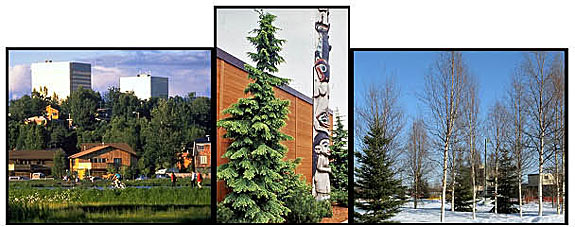
Trees and forests are important to our way of life in Alaska and as our towns grow the value of trees increases. However, they can remain healthy and safe and able to provide benefits only when properly managed.
Community forests across the country are in decline due to invasive species, storms, extreme weather, wildfires, reduced budgets, and development pressures. Many towns, even in Alaska, have lost as much as 40 percent of their tree canopy. This loss hampers a city's ability to meet environmental requirements, including air and water quality standards.
The Alaska Division of Forestry & Fire Protection, with financial assistance from the USDA Forest Service, helps establish and sustain local community forestry programs throughout Alaska. The state fosters partnerships between government agencies, businesses, and volunteers to meet local needs.
Two staff members provide technical assistance, presentations, and publications on:
- Urban tree and forest inventories and management plans;
- Selecting species appropriate for different sites;
- Planting, pruning, and caring for trees and shrubs;
- Site design, planting specifications and details;
- Tree problem diagnosis;
- Local ordinances and other means of preserving and maintaining public trees;
- Retaining and protecting trees during construction;
- Environmental, economic, and social benefits provided by healthy trees and forests;
- Organizing volunteers to plant and care for trees.
For More Information
Alaska Division of Forestry & Fire Protection Community Forestry Program
550 W. Seventh Avenue, Suite 1450
Anchorage, AK 99501-3566
Fax: (907) 269-8931
Josh Hightower, Program Coordinator
(907) 269-8466
Email
Megan Rohlfing, Community Assistance Forester
Email